


Are Perfume Decants Authentic? A 2026 Guide

Table of Contents
- What Are Perfume Decants and How Do They Differ From Factory Samples
- Are Perfume Decants Authentic Fragrance
- How to Check If Perfume Is Authentic Before Buying
- Does Decanting Affect Perfume Quality and Longevity
- How to Buy Perfume Decants Online Safely
- Building Your Decant Collection: Size, Price, and Value
- Frequently Asked Questions
Last Updated: October 14, 2026
What Are Perfume Decants and How Do They Differ From Factory Samples
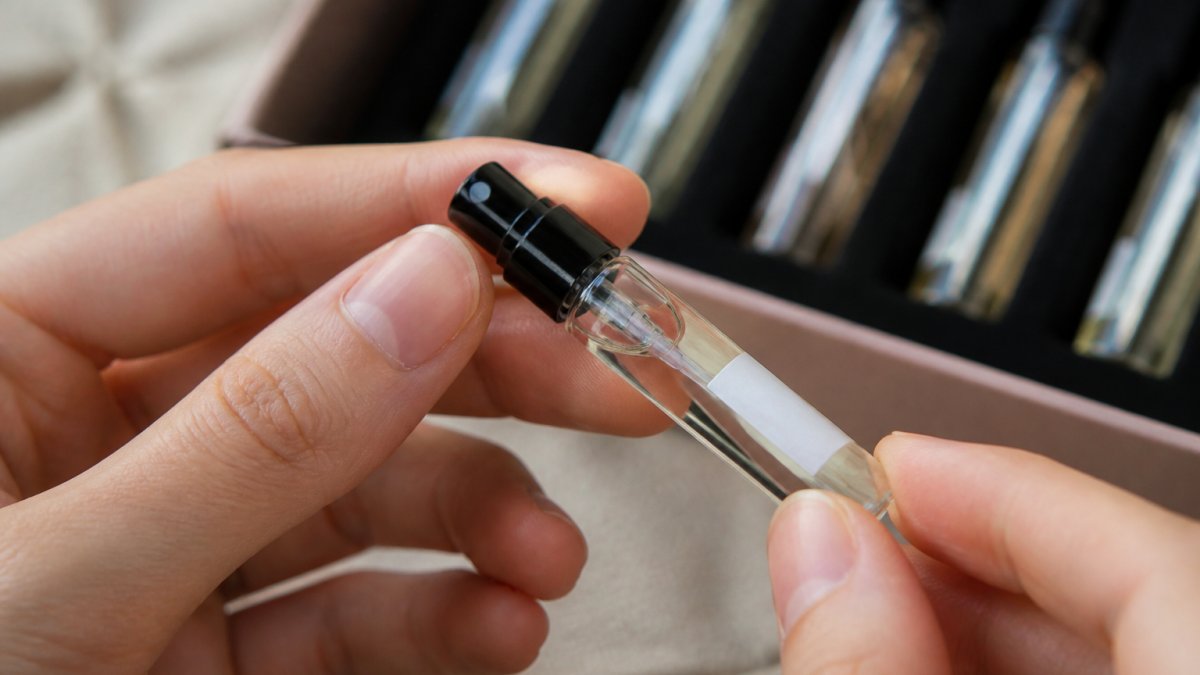
A perfume decant is a small portion of fragrance transferred from an original full-sized bottle into a smaller container, typically a spray vial or atomiser, and the question of whether are perfume decants authentic in Australia depends on their source.
Factory samples are produced by the fragrance house and arrive in sealed, branded packaging with official batch codes. At Luxe Petit Parfums, we meticulously decant 100% authentic, undiluted scents, offering a luxurious and trustworthy way to discover new favorites or indulge in coveted aromas without the commitment or hefty price tag of a full bottle.
The juice inside a decant is identical to what's in the full bottle: concentration, scent profile, and longevity remain unchanged. What changes is convenience and cost.
The practical advantage is immediate: you can try multiple fragrances on your skin before investing in full-size bottles. You're not gambling on a $150 bottle that might not work for you.
Are Perfume Decants Authentic Fragrance
Yes, perfume decants are authentic fragrance when sourced from genuine original bottles. The undiluted juice is identical to what comes in the factory-sealed bottle. Authenticity depends entirely on the source, not the container.
The difference between genuine juice and packaging
The confusion arises because "authentic" can mean two things: authentic fragrance (the actual scent compound) or authentic packaging (the original branded box and seal).
If a decant is filled from a counterfeit bottle, the juice is counterfeit too; if it's filled from a genuine original bottle, the juice is genuine, period.
Reputable decant sellers source their original bottles directly from authorised retailers or verified wholesale channels.
Why decanting doesn't compromise authenticity
A common concern is that transferring fragrance damages or dilutes it. This is unfounded. Fragrance is a stable liquid compound; moving it between containers with proper hygiene and handling does not alter its chemical composition, scent profile, or longevity.
The fragrance performs identically in a 5ml atomiser as in the original 100ml bottle, same top, heart, and base notes, same wear time and projection.
How to Check If Perfume Is Authentic Before Buying
Verifying authenticity before purchase protects you from counterfeit products and unreliable sellers, especially when determining whether are perfume decants authentic in Australia. A decant is harder to verify than a sealed retail bottle: once fragrance has been transferred into a plain atomiser, you cannot confirm the liquid's origin by looking at it. What you can do is assess the seller's sourcing evidence, listing consistency, and willingness to stand behind the product.
What you can and cannot verify
You can check:
- The seller's stated source bottle, batch code and purchase channel.
- Whether the batch code format matches the brand's known conventions and the claimed production period.
- Listing consistency, brand, fragrance name, concentration (EDT, EDP, parfum), size and batch code all agreeing across the product page, order confirmation and label.
You cannot reliably verify:
- That the liquid came from the specific bottle the seller photographed.
- That the juice has not been diluted, even slightly, unless you have a reference to compare against.
- Authenticity from smell alone in the first few minutes, top notes can read similarly across a genuine bottle and a well-made imitation.
A repeatable seller-credibility checklist
Work through these before you pay. A seller who passes most is a reasonable risk; one who fails several is not.
- Business identity. Is there an ABN, a registered business name, a physical contact address and a working phone or email? A seller operating only through a social media handle with no business details is harder to pursue if something goes wrong.
- Sourcing statement. Does the listing explain where original bottles come from, authorised retailers, duty-free, verified wholesale, or is it vague ("sourced from a trusted supplier")?
- Batch code disclosure. Will the seller provide the batch code from the source bottle on request, before purchase? Refusal or deflection is a red flag.
- Listing specificity. Does the page name the brand, fragrance, concentration, size in millilitres, and atomiser type? "Designer mystery decant" listings should concern you.
- Photographic evidence. Are there clear photos of the source bottle, the batch code, the filled atomiser and the label? Stock imagery alone tells you nothing.
- Decanting and hygiene disclosure. Does the seller describe their equipment, cleaning routine and how they avoid cross-contamination between fragrances?
- Policy clarity. Are shipping, returns, leakage and misdescription policies written down, or only promised in chat?
- Cross-platform reviews. Look for consistent feedback across more than one platform and over time, not a burst of five-star reviews in a single month.
- Price plausibility. A decant should cost less than a full bottle because you are buying less volume, not because the juice is diluted or the source bottle is counterfeit. Prices far below the going rate for the same fragrance and size warrant caution.
- Responsiveness. Ask one specific question before buying (for example, the batch code or the fill date). How the seller answers tells you a lot about how they will handle a problem later.
Red flags worth walking away from
Certain behaviours signal unreliable sellers. If a seller cannot explain how they verify authenticity, avoids discussing sourcing, or becomes defensive when asked direct questions, proceed with caution. Trustworthy sellers welcome scrutiny because they have nothing to hide.
Watch for sellers offering suspiciously low prices, pressuring you to pay outside a platform with buyer protection, or reusing generic product photos across dozens of unrelated fragrances.
If a decant is not what was advertised: your options
The Australian Consumer Law, contained in the Competition and Consumer Act 2010 and enforced by the ACCC alongside state and territory fair trading agencies, gives you rights when goods are misrepresented or not of acceptable quality. Those rights apply to decants sold by a business in the same way they apply to any other consumer product. If a decant is described as containing a specific fragrance from a genuine bottle and it does not, that is a misrepresentation.
A practical sequence when something goes wrong:
- Document everything immediately. Keep screenshots of the listing, the order confirmation, the payment receipt, and photos of the decant as it arrived, including the label, fill level and any leakage.
- Contact the seller in writing. State clearly what was advertised, what you received, and what remedy you want (replacement, refund or repair). Give a reasonable deadline and keep the correspondence.
- Escalate to the payment platform. If the seller does not resolve it, lodge a dispute with your card issuer or payment provider. Card schemes generally have time limits, so do not delay.
- Contact the relevant consumer agency. You can raise the matter with the ACCC or your state or territory fair trading body. They do not resolve individual disputes for you, but they do record complaints and can act on patterns of conduct.
- Consider a chargeback or small claim. For larger amounts, a chargeback through your card issuer or a claim through your state's small claims tribunal may be worth pursuing.
Does Decanting Affect Perfume Quality and Longevity
The short answer is no, decanting itself does not degrade fragrance quality or reduce longevity when handled properly.
However, storage conditions after decanting matter significantly. Fragrance is sensitive to light, heat, and air exposure.
The atomiser design affects performance slightly. A well-designed spray mechanism delivers consistent misting and minimises air contact; poor-quality atomisers that don't seal properly allow oxidation, gradually changing the fragrance.
Most decants remain fresh and perform identically to their source bottles for 6-12 months under normal storage.
How to Buy Perfume Decants Online Safely
Purchasing decants online requires confidence in both the seller and the product. Several steps reduce risk and ensure you receive authentic, high-quality fragrance.
Assessing seller credibility and track record
Start by researching the seller's history and reputation. How long have they been operating? What do independent reviews say about their authenticity, packaging, and customer service?
Check whether the seller provides clear product descriptions: fragrance brand, name, concentration (eau de parfum, eau de toilette), batch code, and decant size. Detailed listings suggest professionalism and accuracy; vague descriptions like "designer fragrance mystery decant" should concern you.
Look for sellers who offer detailed photos of their decants, including close-ups of batch codes, atomisers, and labelling. Reputable sellers also describe their decanting process, how they verify source bottles, what equipment they use, and how they ensure hygiene. Luxe Petit Parfums emphasises our commitment to 100% authentic, undiluted decants.
Understanding your consumer protections
In Australia, consumer law protects purchasers of goods sold online. The Australian Consumer Law requires that goods be of acceptable quality, fit for purpose, and accurately represented.
When you purchase online, document everything: screenshots of product descriptions, order confirmations, and photos of what arrives.
If a seller refuses to help, lodge a dispute with the payment platform (credit card, PayPal, etc.) or escalate to the Australian Consumer Law authorities.
Building Your Decant Collection: Size, Price, and Value
Decant sizes range from 2ml to 10ml, each serving different purposes. Smaller decants (2ml-3ml) are ideal for testing a fragrance on your skin before committing to a larger size. Mid-sized decants (5ml) offer better value for fragrances you enjoy wearing regularly. Larger decants (10ml) suit fragrances you love and plan to wear frequently. But size alone does not tell you whether you are getting good value, look at cost per millilitre, fill accuracy, and the total landed cost including shipping.
Working out cost per millilitre
The only fair way to compare decants against each other, and against official samples and full bottles, is cost per millilitre. The maths is simple:
Price ÷ volume in ml = cost per ml
A few worked examples:
- A 5ml decant at $25.00 works out to $5.00 per ml.
- A 10ml decant at $40.00 works out to $4.00 per ml, better value per millilitre than the 5ml, even though the upfront cost is higher.
- A 2ml decant at $15.00 works out to $7.50 per ml, the most expensive per millilitre, which is normal for very small sizes because the atomiser, vial and labour cost the same regardless of fill volume.
Run the same calculation on an official manufacturer sample if one is available. Official samples are often priced per millilitre at a premium, but they come in branded packaging with the house's own batch coding, which some buyers value. A decant is usually cheaper per millilitre than an official sample of the same fragrance, but not always, check before assuming.
Checking that the stated volume is accurate
Decant volume is not regulated the way packaged goods sold by weight or volume normally are, so fill accuracy depends on the seller's equipment and honesty. Practical checks:
- Compare fill levels across your order. If you buy three 5ml decants from the same seller and one is visibly lower, ask why.
- Look at the atomiser and vial. A 5ml vial filled to the shoulder is roughly 5ml; a vial filled to the neck is not.
- Weigh if you are serious. A filled 5ml atomiser has a predictable weight range once you know the empty vial weight. Sellers who publish empty and filled weights are unusually transparent and worth noting.
Shipping, storage and returns in practice
Where a decant is shipped from affects cost, speed and your options if something goes wrong.
Overseas sellers. International shipping is slower, more expensive, and sometimes refused outright because of dangerous goods rules.
Heat and leakage. Fragrance is sensitive to heat and light.
Storage at home. Keep decants in a cool, dark place, a drawer or cupboard away from windows, radiators and bathrooms.
Building a collection without overspending
When building a collection, start with 5ml decants of fragrances that genuinely interest you. This lets you experience diverse scent profiles, fresh citrus, warm amber, floral, woody, without overcommitting financially.
A practical sequence for most buyers:
- Test with 2ml-3ml for fragrances you are curious about but not yet sold on.
- Move to 5ml for anything you enjoyed enough to wear more than twice.
- Step up to 10ml for fragrances you reach for weekly and want to assess across seasons.
- Buy the full bottle only once a decant has survived a full month of regular wear.
This staged approach keeps your cost per millilitre sensible at every step and means the money you spend on decants is money you would otherwise have spent gambling on full bottles that did not suit you.
Frequently Asked Questions
Are perfume decants authentic, or are they diluted knock-offs?
Genuine perfume decants contain 100% authentic, undiluted fragrance transferred from original bottles by reputable sellers. The decanting process itself does not dilute or alter the scent, only the packaging changes. Authenticity depends entirely on the source bottle and seller credibility. Counterfeit decants exist, but they come from sellers using fake source bottles, not from the decanting method itself. Always verify the seller's transparency about their source and batch codes.
How do I check if a perfume decant seller is trustworthy?
Look for sellers who disclose their decanting process, show batch codes from original bottles, and provide detailed customer reviews. Trustworthy sellers explain how they source fragrances, offer clear return or dispute options, and respond promptly to questions about authenticity. Check their social proof and whether they address customer concerns openly. Australian Consumer Law protects you if goods are not as described, reputable sellers acknowledge this and make guarantees accordingly.
Does decanting affect perfume quality or how long it lasts on skin?
No. Decanting does not degrade fragrance quality or longevity when done hygienically. The scent concentration, sillage, and wear time remain identical to the original bottle. What matters is proper storage: keep decants in a cool, dark place away from direct sunlight and heat. A 5ml or 10ml decant in a sealed atomiser will perform exactly like the same fragrance in a full-sized bottle, provided the source was genuine and the transfer was clean.
What's the difference between perfume samples and decants?
Factory-made samples are small vials or sprays produced by the fragrance house itself, often included with purchases or given at department store counters. Decants are portions transferred from full-sized bottles by third-party sellers into smaller spray bottles. Both can be authentic, but decants offer more variety and flexibility in size and seller choice. Decants typically cost less per millilitre than factory samples, and you can choose exactly which fragrances to try rather than accepting what the brand provides.
Will a 5ml or 10ml decant give me enough time to test if a fragrance suits my skin?
Yes. A 5ml decant with 2-3 sprays per application typically lasts 10-15 wears, and a 10ml bottle lasts 20-30 wears. This is enough time to assess how a scent develops on your skin, how it reacts to your chemistry, and whether you like it after a few days. Most people know within 3-5 wears whether a fragrance is right for them. If you're testing multiple fragrances, decants let you rotate through them without committing to expensive full bottles.
How can I verify a decant's authenticity using batch codes?
Batch codes (printed on the original bottle or box) identify when and where a fragrance was made. Reputable decant sellers should provide or photograph the batch code from their source bottle. You can cross-reference codes with fragrance databases or contact the brand directly to confirm the code matches a real product. Be cautious if a seller cannot or will not show batch codes, this is a major red flag. Counterfeit fragrances often have fake, illegible, or missing batch codes.
What Australian consumer protections apply if I'm unhappy with a decant purchase?
The Australian Consumer Law protects you if goods are not as described or not fit for purpose. If a decant arrives damaged, the fragrance smells wrong, or the seller misrepresented authenticity, you can request a refund or replacement. Most online retailers offer their own return windows (typically 7-30 days). Keep your order confirmation, photos of the product, and any correspondence. If a seller refuses to resolve the issue, you can escalate through your payment provider or contact your state's consumer affairs authority.