


How to Choose Niche Perfume Samples: A Step-by-Step Guide

Table of Contents
- Why Niche Perfume Samples Matter Before Buying Full Bottles
- Understanding Fragrance Families and Scent Notes
- How to Test Perfume Samples on Your Skin
- Building Your Niche Fragrance Discovery Set
- How Long to Test a Perfume Before Deciding
- How to Find Your Signature Scent
- Ensuring Authenticity and Quality in Your Samples
- Frequently Asked Questions
Last Updated: October 16, 2026
Why Niche Perfume Samples Matter Before Buying Full Bottles
Buying a full bottle of niche fragrance untested is a gamble. A 100ml bottle costs $150-$400, and if the scent doesn't suit your skin chemistry or taste, that money is wasted.
This is where you choose niche perfume samples, and everything changes. A 5ml or 10ml decant costs a fraction of a full bottle and lets you test a fragrance over days or weeks, so you discover what works before committing.
At Luxe Petit Parfums, we offer a refined approach: rather than buying blindly, you can test first, explore different fragrance families, understand your preferences, then invest in the full bottles that truly matter.
The benefits are clear:
- Test expensive fragrances without financial risk
- Discover new scents you'd never try otherwise
- Build a diverse collection affordably
- Understand how a fragrance develops on your skin over time
- Make confident decisions about full-bottle purchases
Testing samples isn't just practical, it's essential. Skin chemistry, body temperature, and even diet affect how a scent develops, so what smells incredible on a friend may smell completely different on you.
Understanding Fragrance Families and Scent Notes
Every fragrance is built from three layers of scent notes. Understanding this structure helps you predict whether a fragrance will suit you before you spray it.
Top, Heart, and Base Notes Explained
A fragrance unfolds in three phases. The top notes are what you smell in the first 5-15 minutes: light, fresh, energetic scents like citrus, bergamot, and ginger.
The heart notes (middle notes) emerge as top notes fade, lasting 15 minutes to a few hours. They define the fragrance's personality: florals like jasmine, rose, and gardenia, plus spices and herbs.
The base notes are the foundation, lasting 4 hours or more. Deep and anchoring, they include musk, sandalwood, oud, vanilla, and amber, giving a fragrance staying power and richness.
When you test a sample, you're experiencing all three phases. The first spray smells different from what you smell an hour later. This is normal. Understanding this helps you evaluate fairly.
Common Fragrance Families: Floral, Citrus, Woody, and More
Fragrances cluster into families based on dominant character. Knowing them helps you navigate niche perfume discovery.
Floral fragrances centre on flower scents like rose, peony, tuberose, and gardenia, ranging from delicate to heady.
Citrus fragrances lead with bright, zesty top notes of lemon, orange, bergamot, and grapefruit.
Woody fragrances build around sandalwood, cedarwood, or oud.
Amber fragrances are warm and sensual. Amber, vanilla, and resins create a cosy, inviting character. These work beautifully in autumn and winter.
Fresh fragrances emphasise clean, airy notes like aquatics, herbs, and green florals, smelling of soap, water, or plants.
Spicy fragrances feature pepper, cinnamon, cardamom, or clove. Warming and complex, they pair well with cooler weather and evening occasions.
Most niche fragrances blend multiple families: floral with woody base notes, or citrus with spicy heart notes.
How to Test Perfume Samples on Your Skin
Testing properly is the difference between discovering a signature scent and wasting money on samples you never wear.
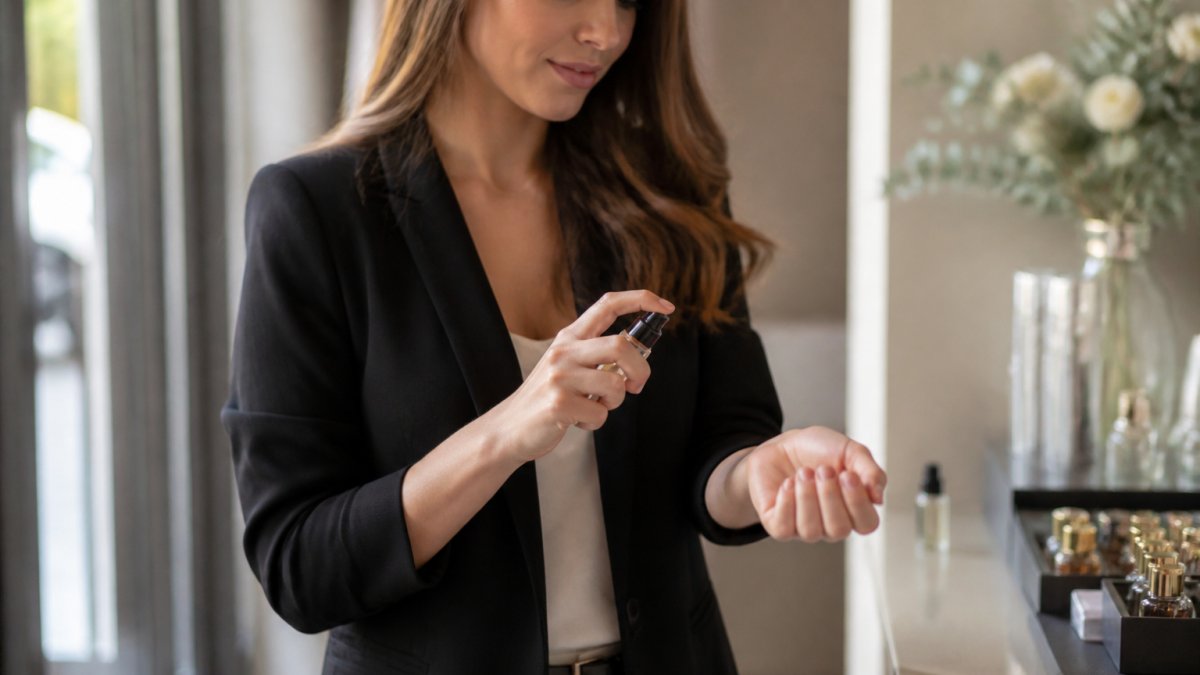
Preparing Your Skin for Accurate Testing
Your skin's condition affects fragrance performance. Clean, hydrated skin shows a fragrance's true character; dry skin can distort scents or make them fade faster.
Before testing, wash your wrists and inner elbows with unscented soap and dry completely. These pulse points sit close to the surface, and their heat amplifies fragrance projection.
Avoid applying fragrance over other scents. Don't test on skin with lotion, body oil, or perfume residue, and wash between applications when testing multiple samples.
Keep skin hydrated with a fragrance-free moisturiser before testing. Hydrated skin holds fragrance longer and shows its full development, while dehydrated skin fades quickly and misleads you about longevity.
Avoid testing when tired, stressed, or unwell. Your sense of smell changes with physical state, so a fragrance you dislike when exhausted might charm you when rested.
Applying and Evaluating Over Time
Spray a sample once on your inner wrist or inner elbow. One spray is enough; more clouds your judgment with overwhelming concentration.
Don't rub your wrists together. This breaks down fragrance molecules and speeds up fading. Let the spray dry naturally.
At 5 minutes, note your first impression: pleasant, surprising, or disappointing? Write it down.
At 15 minutes, smell again as top notes fade. What's emerging? Does it feel more complex or interesting?
At 30 minutes, the heart notes dominate and the fragrance reveals its true character. Many that seemed ordinary at first become beautiful here.
At 1, 2, and 4 hours, check again: how's the longevity? Is it fading or staying strong?
This takes time, but it's the only way to truly evaluate a fragrance. Quick sniffs at a counter miss the full picture.
Building Your Niche Fragrance Discovery Set
A discovery set is a curated collection of samples across different families: your exploration toolkit.
Sample Sizes and Cost Comparison
A 10ml decant ranges from $35 to $98 AUD. A full 100ml niche bottle costs $150-$400 AUD or more.
For the cost of one full bottle, you could test multiple different fragrances.
At Luxe Petit Parfums, our 5ml and 10ml decants come as labelled spray bottles designed for serious testing, not just sniffing. The spray mechanism lets you apply precisely, just like a full bottle.
A 10ml sample is ideal once you've narrowed your choices, giving you longer to live with a fragrance; a 5ml is perfect for broad exploration. Most collectors start with several 5ml samples, then move to 10ml for top contenders.
Selecting Scents Across Different Families
Don't limit yourself to fragrances you think you'll like. Niche fragrance discovery means exploring beyond your assumptions.
Start with one fragrance from each major family:
- One floral
- One citrus
- One woody
- One amber or warm scent
- One fresh or aquatic
Choose fragrances that intrigue you, not ones that seem "safe." Read the description and note breakdown, and if something sounds interesting, try it.
After testing this core set, you'll know which families resonate. Maybe you love woody fragrances more than expected, or florals feel too heavy. This knowledge guides your next selections.
Then branch out into blended fragrances: a floral-woody hybrid, a citrus-spicy combination. Niche houses often create complex, unexpected blends, and that's where discovery gets exciting.
How Long to Test a Perfume Before Deciding
Many people make snap decisions about fragrances, smelling once and deciding it's not for them. This is a mistake.
A fragrance needs time to reveal itself. Most take 30 minutes to reach their heart notes, some an hour. Until then, you're not experiencing the real fragrance.
Test a sample for at least one week, wearing it daily if possible. Notice how it smells at different times of day: fresh in the morning, sensual in the evening?
After one week, you'll know if a fragrance deserves a full bottle.
Some fragrances grow on you. You might dislike a sample on day one but adore it by day five. Others fade from interesting to forgettable.
If you're undecided after one week, test for a second. By then, clarity usually arrives: either you love it or you don't.
How to Find Your Signature Scent
A signature scent is a fragrance you reach for repeatedly, one that feels like an extension of yourself. Building toward it is the real goal of fragrance sampling.
Creating a Scent Preference Profile
Start documenting your preferences. After each sample, note:
- How it smells: Pleasant? Interesting? Boring? Off-putting?
- When it suits you: Morning or evening? Summer or winter? Work or leisure?
- How it performs: Does it last? Does it project well? Does it feel heavy or light on your skin?
- Your emotional response: Does it make you feel confident? Relaxed? Energised?
After testing 5-10 fragrances, patterns emerge: you'll notice preferred notes, gravitate toward specific families, and understand your own fragrance personality.
Maybe you love warm, spicy scents that feel sophisticated, or you're drawn to fresh, citrus fragrances that feel energising. This is your scent profile.
Use this profile to guide future selections. When considering a new fragrance, check its notes against your preferences: if it aligns with what you love, it's worth sampling.
Recording and Comparing Impressions
Keep a simple fragrance journal, noting:
- Fragrance name and house
- Notes (top, heart, base)
- Date tested
- Your impressions at 5 min, 15 min, 30 min, 1 hour, and final verdict
- Where you'd wear it
- Whether you'd buy a full bottle
This journal becomes invaluable. Deciding between two fragrances months later, you can flip back and remember exactly how each made you feel.
Use a notebook or digital notes app. The format doesn't matter; consistency does.
Over time, your journal reveals your true preferences, cutting through marketing hype and social media trends to show what actually resonates with you.
Ensuring Authenticity and Quality in Your Samples
Authenticity matters. Counterfeit fragrances are common online, perform poorly, and can even cause skin reactions.
When sourcing samples, buy from reputable decanting services that guarantee authenticity.
Avoid suspiciously cheap samples from unknown sellers.
Check storage conditions. Fragrances degrade in heat and sunlight, so quality decanting services store samples in cool, dark conditions and ship in protective packaging.
Inspect your samples on arrival. The liquid should be clear (unless naturally dark, like an oud), the spray mechanism should work smoothly, and the label should be clear and professional.
If anything seems off, contact the seller. Reputable businesses stand behind their products. They'll replace questionable samples without hassle.
Finding your signature scent takes time and intention.
At Luxe Petit Parfums, we've made this journey easier. We guarantee authenticity. View all our available samples and start your discovery today.
| Fragrance Family | Best For | Top Notes | Heart Notes | Base Notes |
|---|---|---|---|---|
| Floral | Spring/summer, daytime | Citrus, herbs | Rose, jasmine, gardenia | Musk, sandalwood |
| Citrus | Daytime, fresh energy | Lemon, bergamot, grapefruit | Light florals, herbs | Musk, light woods |
| Woody | Autumn/winter, evening | Citrus, herbs | Spices, florals | Sandalwood, cedarwood, oud |
| Amber | Autumn/winter, sensual | Spices, citrus | Florals, resins | Amber, vanilla, musk |
| Fresh | Daytime, versatile | Aquatics, citrus, herbs | Green notes, florals | Light musks, woods |
| Spicy | Evening, warming | Pepper, cardamom | Florals, woods | Woods, vanilla, amber |
Frequently Asked Questions
How do I know if a niche perfume sample is authentic and not diluted?
Authentic niche perfume samples from reputable retailers like Luxe Petit Parfums are independently decanted from genuine, commercially purchased bottles into labelled 5ml or 10ml spray bottles. Look for retailers who guarantee authenticity and provide detailed fragrance composition information, including top, heart, and base notes. Authentic samples should have consistent scent strength across wears and match the fragrance profile of the full bottle. Request information about the decanting process and sourcing to verify legitimacy.
How long should I test a perfume sample before deciding if it's right for me?
Test a niche perfume sample for at least 3-5 wears spread across different days and times. This allows you to observe how the fragrance develops on your skin through the top notes, heart notes, and base notes. Skin chemistry varies daily, so multiple wears reveal whether the scent performs consistently. A 5ml or 10ml decant provides enough product for this extended testing period without requiring a full-bottle commitment.
What should I look for when testing a niche fragrance sample on my skin?
When testing how to test perfume samples, note the initial scent impression (top notes), how it evolves after 15-30 minutes (heart notes), and the final dry-down after several hours (base notes). Observe how the fragrance interacts with your skin chemistry, whether it projects well or sits close to the skin, and if it lasts throughout the day. Record your impressions, including emotional response and suitability for different occasions or seasons. This structured approach helps you build a clear preference profile.
Is a 5ml or 10ml sample large enough to properly evaluate a fragrance?
Yes. A 5ml or 10ml decant provides sufficient product for multiple full wears and extended sampling. This sample size allows you to experience the fragrance through multiple applications without running out prematurely, making it ideal for thorough evaluation before committing to a full bottle purchase.